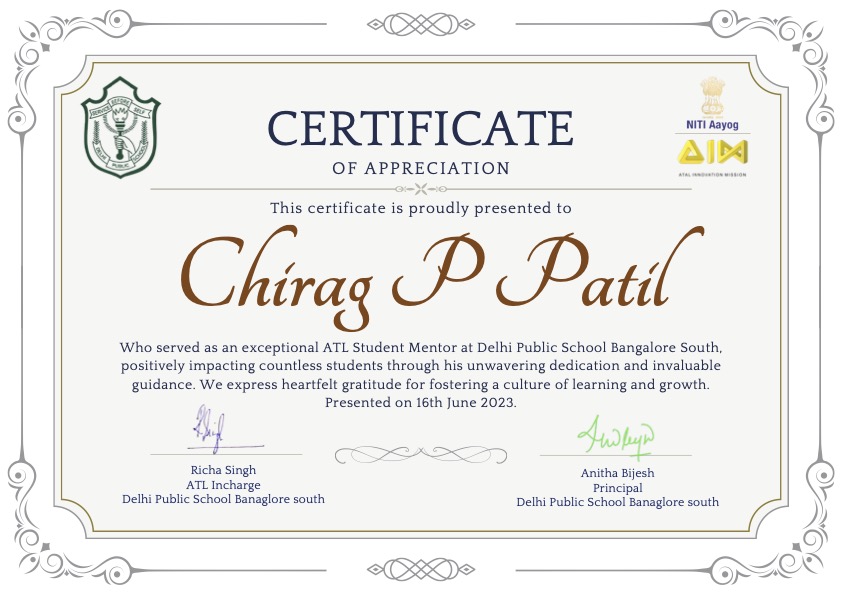
ATL Lab — Student Mentor → Senior Student Mentor
From the first Student Mentor to Senior Student Mentor, I helped build, scale, and sustain the ATL Lab — designing systems, mentoring 50–60+ students annually, and shaping hands-on STEM learning.
My journey with the ATL Lab started as a student in 6th grade — experimenting with 3D modelling and hands-on projects. That early exposure stayed with me, and when the lab restarted post-COVID, I stepped into it again — this time not as a participant, but as a builder.
"I was the first Student Mentor appointed at the ATL Lab — building the role, the structure, and the system from scratch."
Context
When school reopened in 9th grade, the ATL Lab was restarting with new structure and leadership. I was brought in early — initially to assist — but quickly moved into taking ownership of sessions, students, and eventually, how the lab functioned as a whole.
Student Mentor — Building the Foundation
I started by assisting in orientations and quickly moved into taking full sessions for students across grades 7 to 9. These were not traditional classes — they were hands-on, project-driven, and built around how students actually learn.
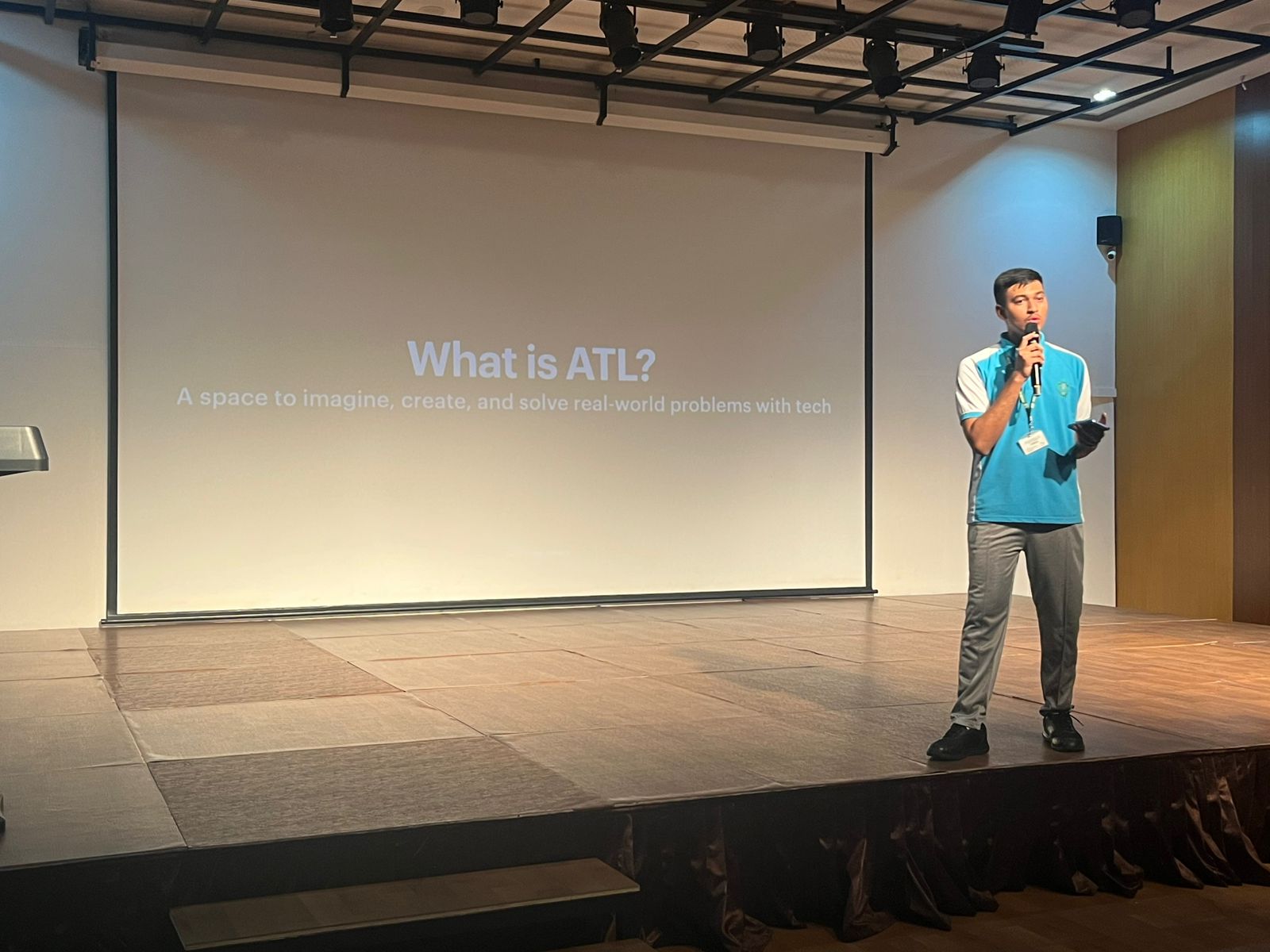
- —Conducted full-class sessions for grades 7–9
- —Handled recruitment and onboarding of students
- —Actively managed lab operations and participation
- —Designed hands-on learning instead of theory-heavy teaching
As the number of students grew, I introduced the concept of Student Coordinators — selecting and training a small group of students to manage communication and assist with execution. This allowed the lab to scale beyond a single mentor.
System Building — Curriculum & Structure
Alongside Sumukh Prasad, I designed and implemented a structured curriculum for the lab — introducing programming, structured problem-solving, and project-based learning into what was previously unstructured exploration.
At the same time, I began building continuity. I trained Harshika as the next Student Mentor — mentoring her not just in teaching, but in how to run the lab. She later carried this forward and trained Saira, continuing the system we built.
"This was the shift — from running sessions to building a system that continues without me."
Curriculum Structure
1. Exploration
   Introduction to tools, ideas, and possibilities

2. Skill Building
   Programming, electronics, design thinking

3. Project Development
   Team-based builds solving real-world problems

4. Integration
   Pitching, iteration, and refinement
ATL Orientation — Driving Scale
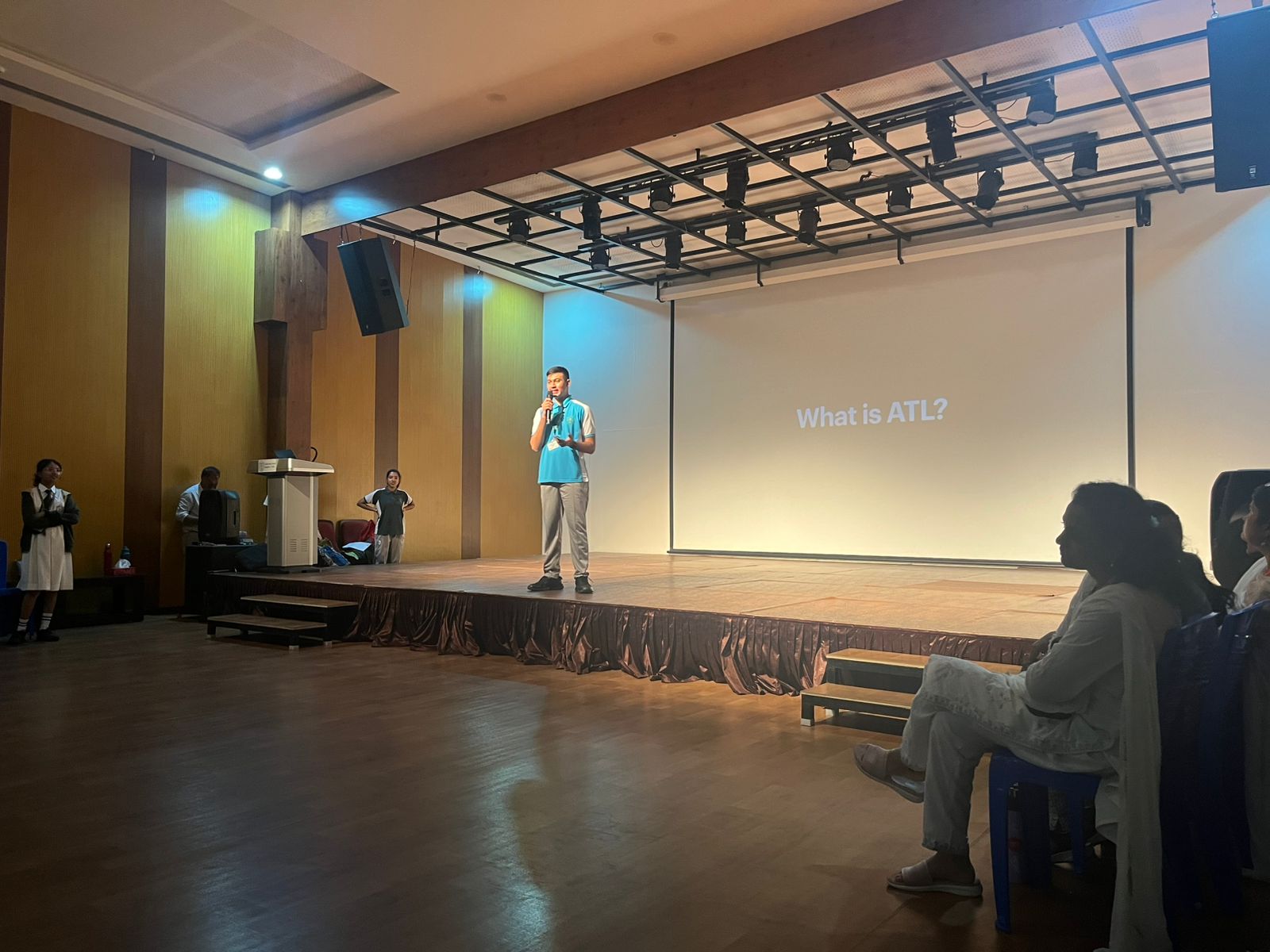
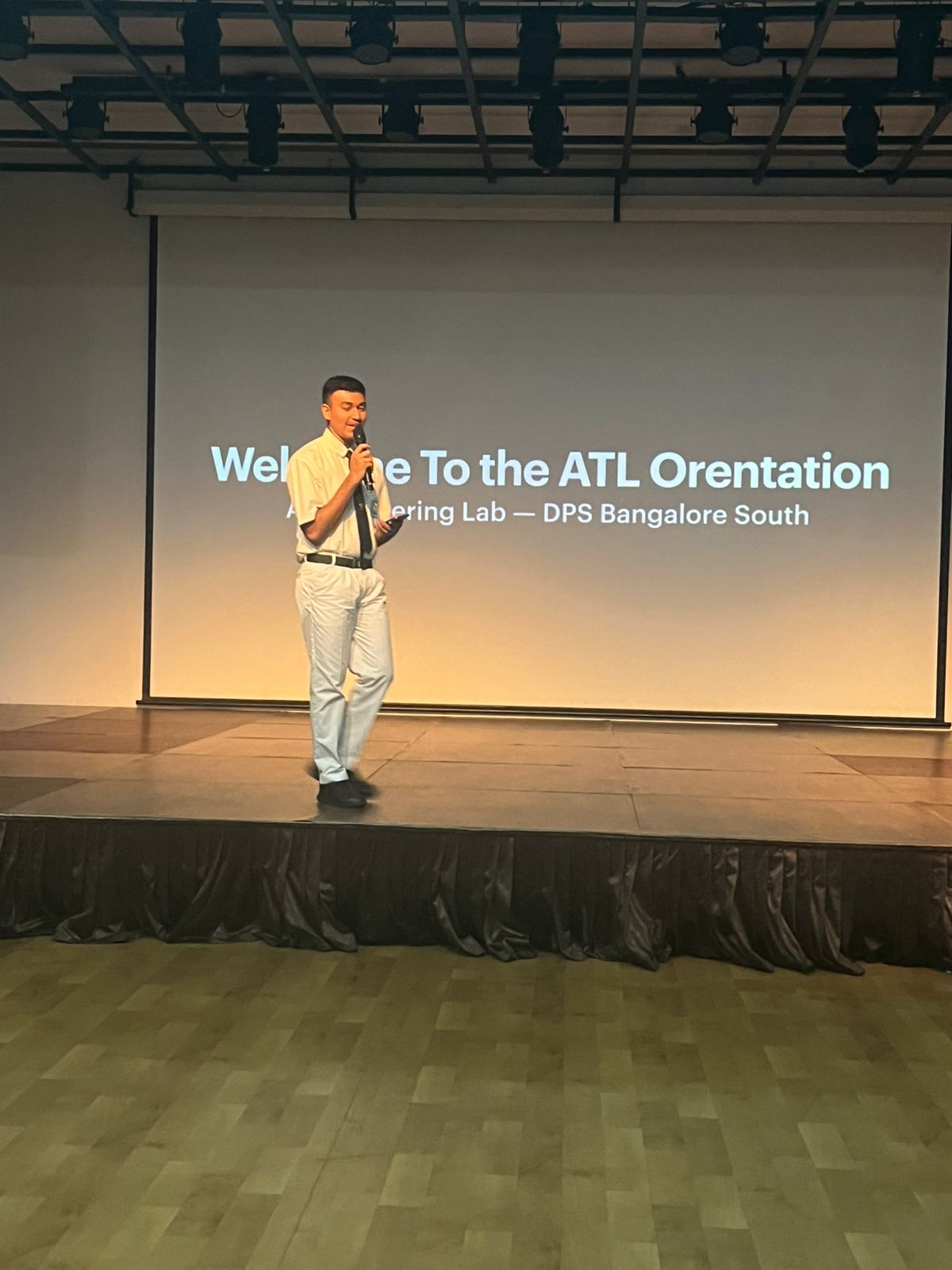
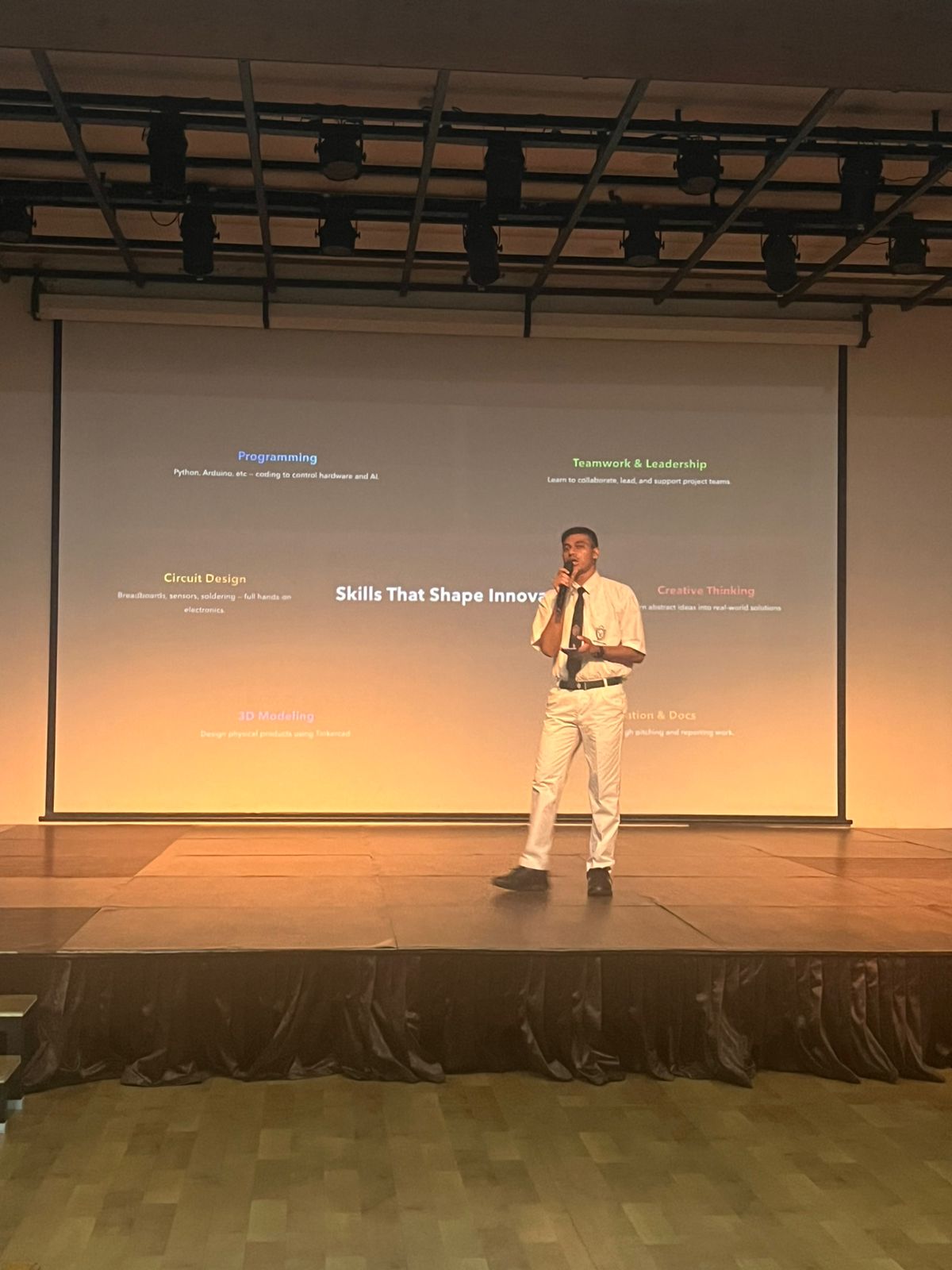
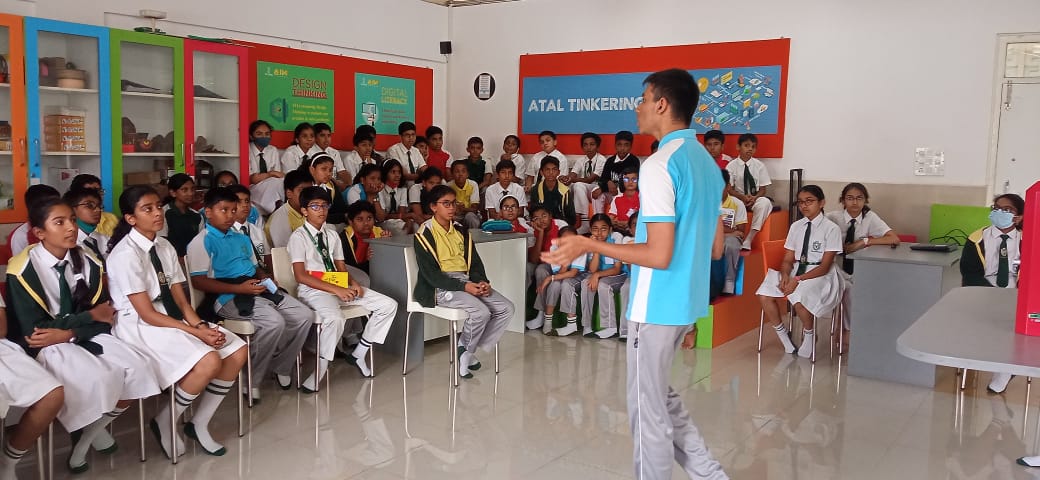
One of the most consistent responsibilities I held was leading the ATL Orientation every year for incoming grade 7 students. These sessions defined first impressions — what the lab stood for, how it worked, and why students should be part of it.
These were not just presentations — they were designed to build interest, set expectations, and create a strong pipeline of engaged students before applications even opened.
ATL Annual Fest
I led the ATL Annual Fest for two consecutive years — where students formed teams and built projects to showcase. Even when participation dropped or teams struggled, I pushed execution — ensuring projects were completed and presented.
Senior Student Mentor — Oversight & Continuity
In 11th and 12th grade, I transitioned into a Senior Student Mentor role. Due to academic commitments, I reduced direct teaching — but remained deeply involved in decision-making, system continuity, and student development.
- —Oversaw mentor selection and student onboarding
- —Conducted internal pitch sessions and feedback reviews
- —Guided project teams through execution and iteration
- —Maintained continuity across batches and leadership transitions
Even when not teaching, I worked directly with student teams — sitting with them, helping refine ideas, and pushing them to think deeper. This made the system more collaborative and approachable.
Scale & Impact
Reflection
This experience changed how I think about leadership. It is not just about running things — it is about building systems that scale, sustain, and evolve even when you step back.
"The real shift was from being the person doing everything to building something that no longer depends on you."
Verification