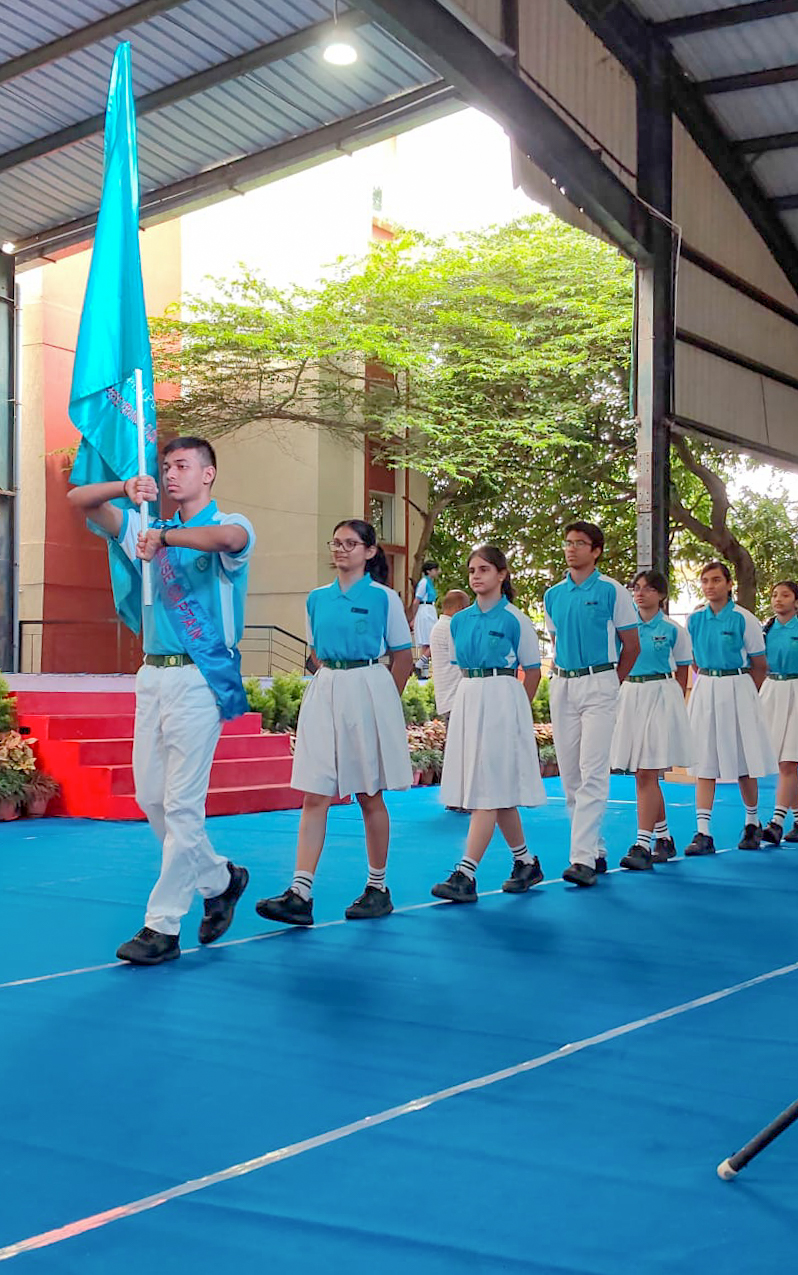
Cauvery House Captain
Led Cauvery House as Captain, managing high expectations, competitive pressure, and full-scale student coordination while sustaining performance across academics, sports, and cultural events.

Stepping into the role of House Captain was not just a promotion — it was a shift in responsibility, pressure, and expectation. What had previously been execution now became full ownership.
"I wasn’t just leading the house — I was defending a standard I had already set."
Context
Having previously served as Vice Captain, I entered this role with experience, but also with expectations — both from others and from myself. The bar had already been set high, and the challenge was no longer proving capability, but sustaining and elevating it.
Role & Responsibility
- —Led the house council, prefects, and student body across all activities and events
- —Managed coordination between students, teachers, and house wardens
- —Oversaw discipline, participation, and performance across academics, sports, and cultural events
- —Directed execution of house-level strategies for competitions and school representation
- —Maintained accountability and structure across all ongoing initiatives
Leadership Shift
The transition from Vice Captain to Captain brought a fundamental shift — from contributing to controlling. Decisions carried weight, accountability was absolute, and expectations extended beyond performance into consistency.
At the same time, academic pressure increased significantly. Balancing leadership at this scale while maintaining academic focus required discipline, prioritization, and clarity in decision-making.
Competitive Environment
This role came with a unique challenge — visibility. My previous work had already established a reputation, which meant increased scrutiny and competition from other houses.
Other teams adapted, pushed harder, and actively tried to outperform. Leadership here was not just about internal management, but also about maintaining an edge in a highly competitive environment.
"Leadership at this level meant not just building a strong team — but ensuring it stayed ahead under pressure."

Execution
With prior experience, I was able to anticipate challenges, structure workflows, and guide the team effectively. The focus shifted from reactive problem-solving to proactive control — ensuring systems ran smoothly without constant intervention.
Impact
The house operated with consistency, structure, and competitive strength throughout the year. Performance was sustained across events, and coordination between teams remained strong despite increasing pressure.
Reflection
This role refined my understanding of leadership under pressure. It was no longer about proving ability — it was about maintaining standards, managing expectations, and delivering consistently.
It also reinforced the importance of control, composure, and foresight — especially when operating in environments where competition, pressure, and responsibility intersect.
"Leadership is not defined by the position you hold — but by the standard you sustain."