Sherlock — Lab Inventory & Lending System
A full-stack inventory and lending system designed for real-world lab environments, rebuilt from an early Rails prototype into a production-ready Django application.

Inventory & Lending Management System
Managing lab inventory sounds simple — until real-world factors like borrowing, returns, damaged items, and tracking usage come into play. Sherlock turns this complexity into a structured, usable system.
"Built for real lab environments — where inventory is constantly moving, borrowed, and evolving."
Context & Evolution
Sherlock began as a Ruby on Rails project developed in 2023 by Sumukh Prasad, designed to organize inventory using a simple but powerful structure — Sections, Spaces, and Items.
In 2025, I rebuilt the system from the ground up using Python and Django. This was not just a migration, but a complete transformation — expanding Sherlock from a static inventory tracker into a full inventory and lending management system designed for real lab environments.
What I Built
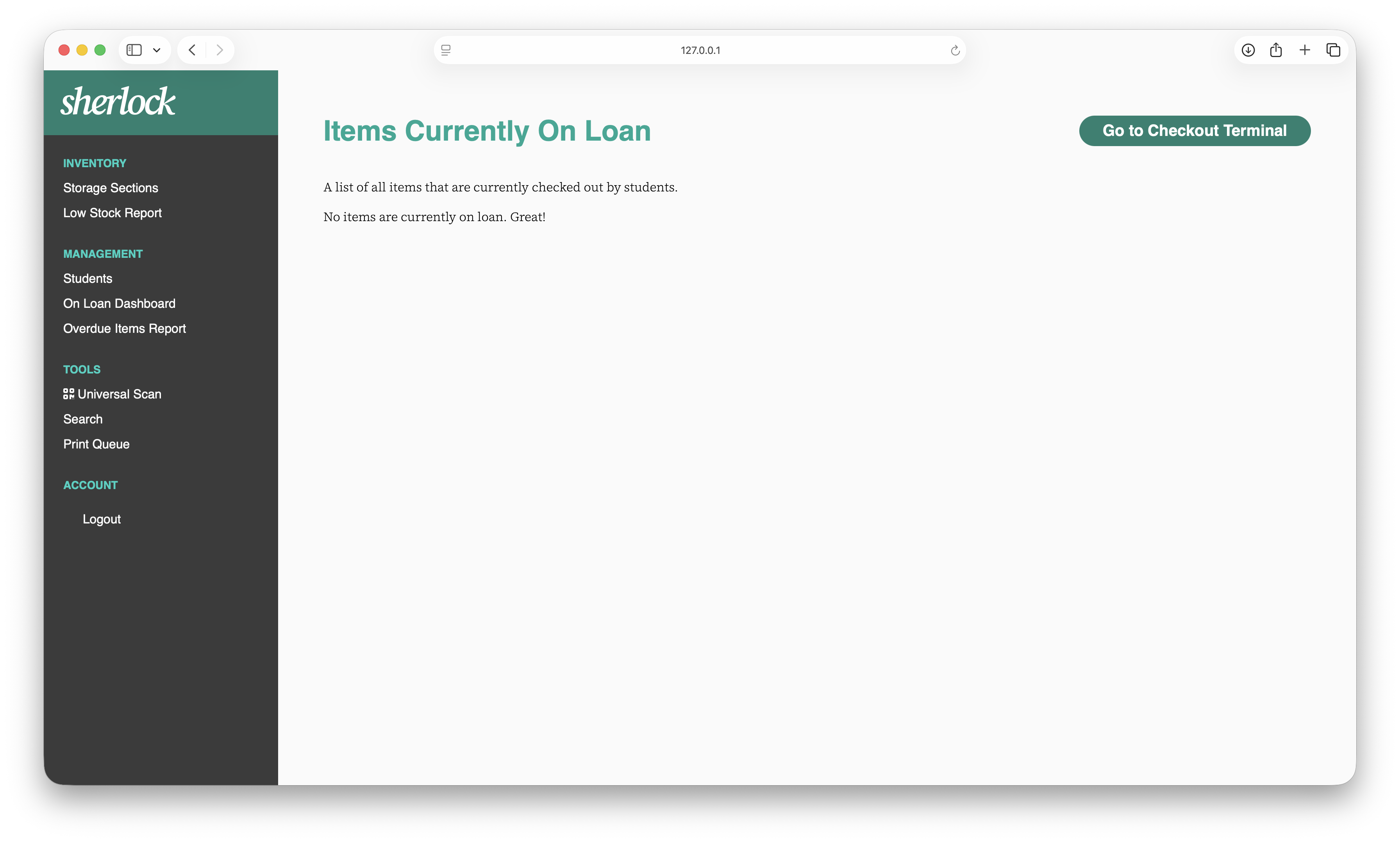
Sherlock v2.0 introduces a complete system for managing inventory lifecycle — from tracking stock and organizing assets to handling lending workflows, user access, and real-time operational visibility.
System Evolution
The biggest challenge was rebuilding a Ruby on Rails system into Python while preserving its core structure and logic. Each component had to be rethought — not just translated — to ensure consistency, reliability, and scalability.
Beyond replication, the system was significantly expanded. Features like lending workflows, condition tracking, role-based access, and audit trails transformed Sherlock into a complete operational system rather than just a database.
"This was not just a rewrite — it was a transition from a static inventory tracker to a dynamic system that interacts with real-world usage."
Interface & Experience
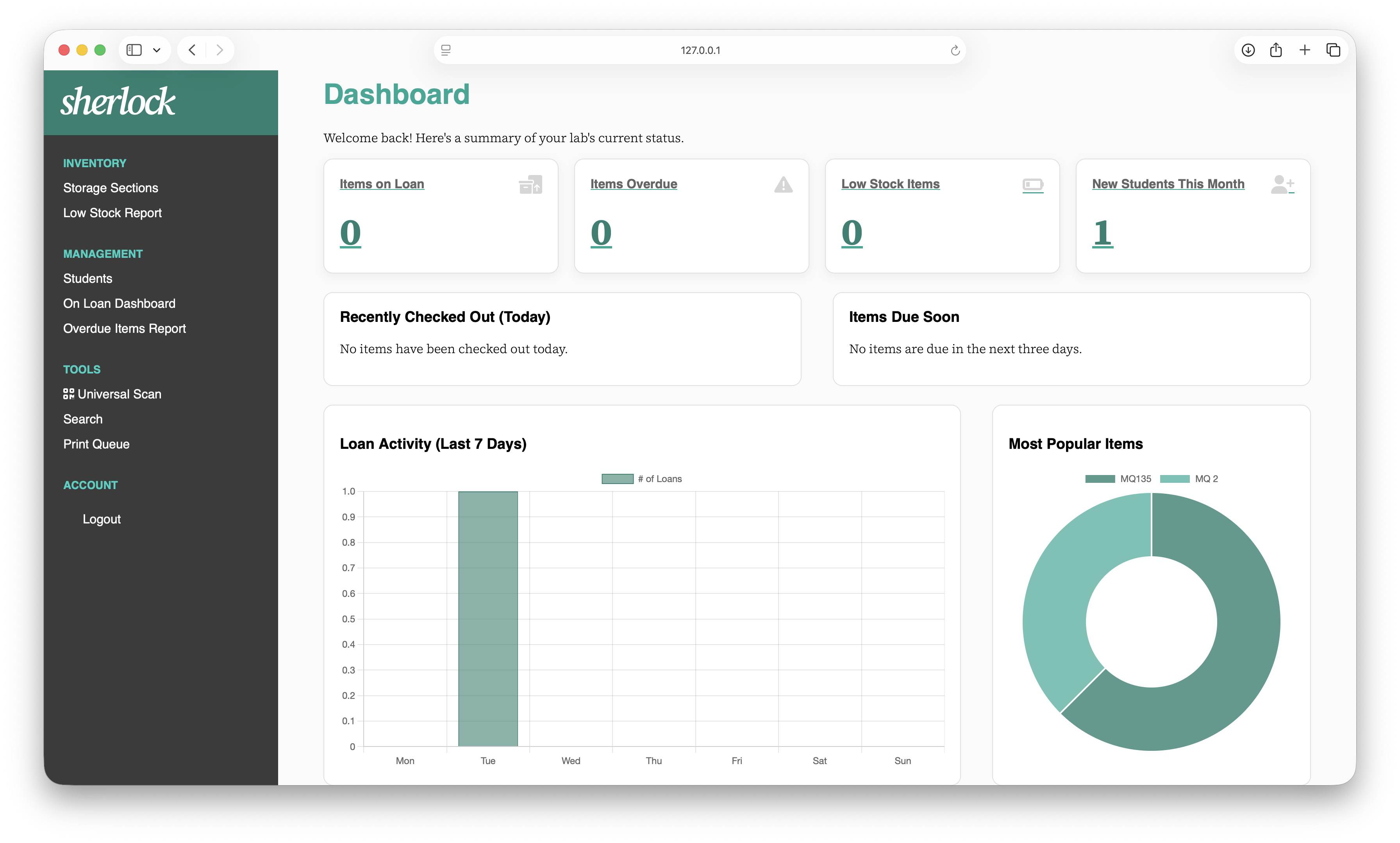
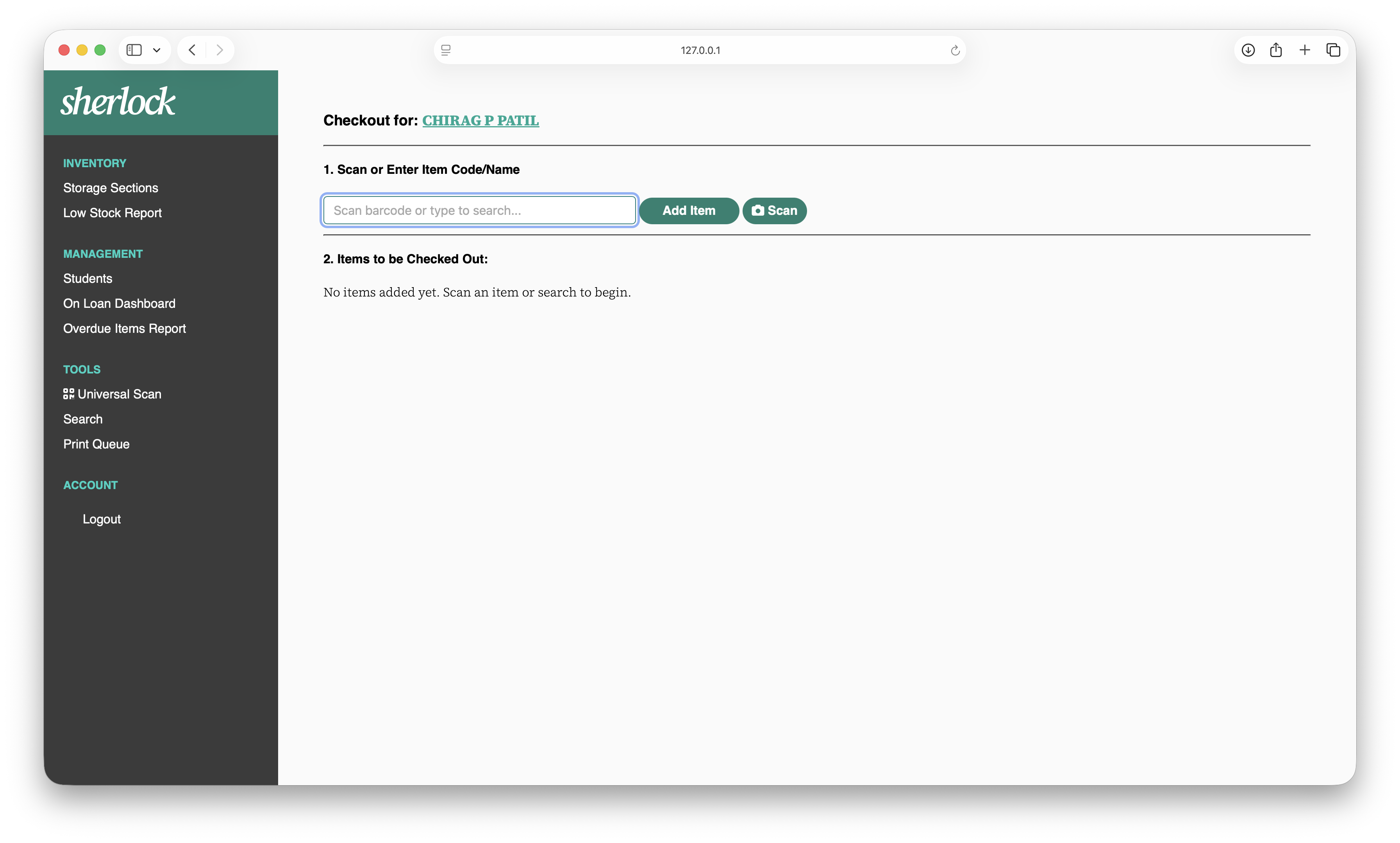
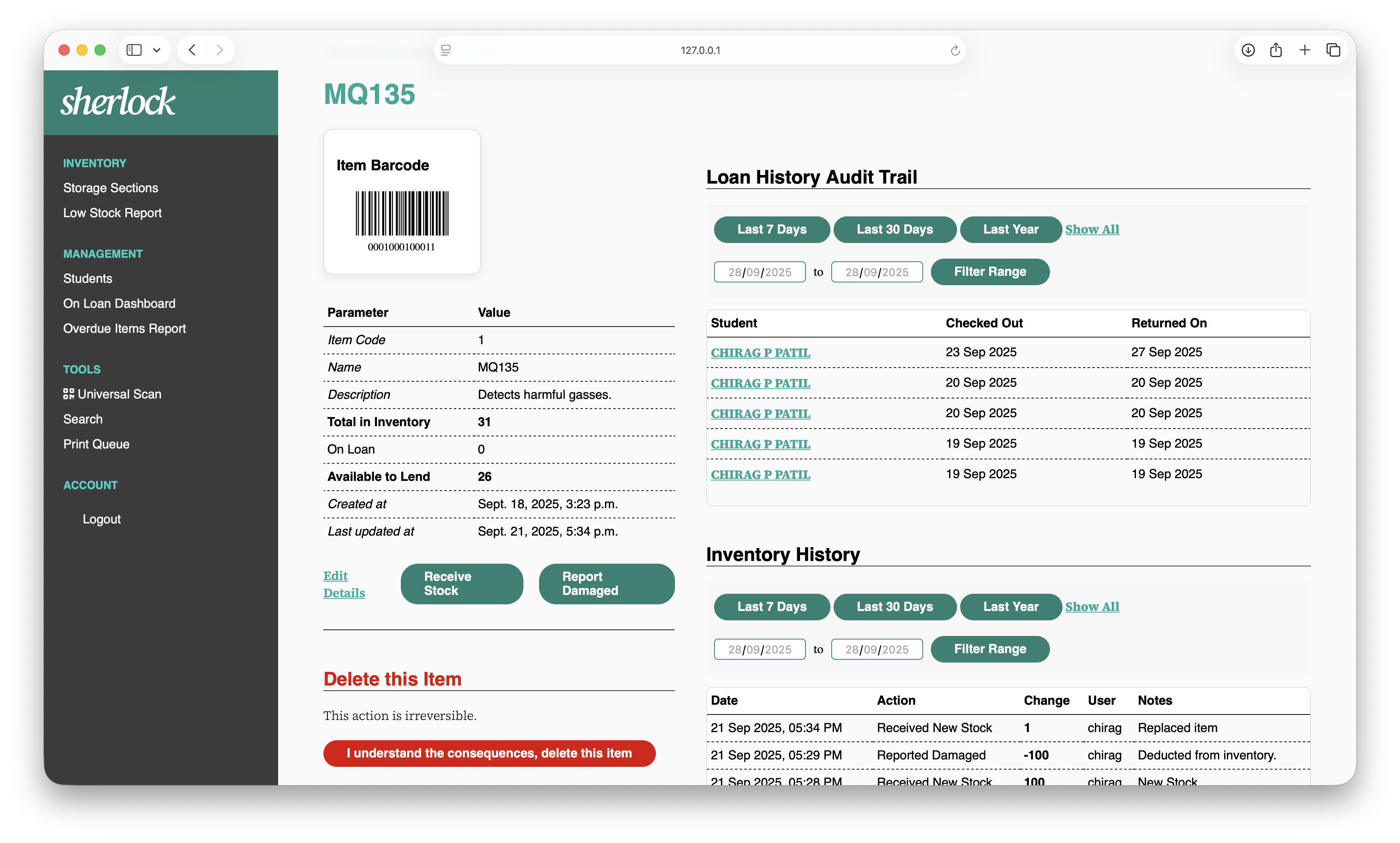
Beyond high-level dashboards, the system drills down into item-level activity, lending history, and condition tracking.
What Makes It Different
- —Designed around real-world lab workflows, not abstract data models
- —Handles lending, returns, and condition tracking seamlessly
- —Optimized for usability — minimal friction for students and staff
- —Bridges physical inventory behavior with digital tracking
Reflection
This project changed how I think about systems. Inventory is not just a list of items — it becomes complex when people interact with it. Borrowing, damage, and movement introduce layers of logic that must be carefully handled in software.
It also reinforced the importance of usability. A system like this is only valuable if people can actually use it easily. Designing for real-world usage — and anticipating what can go wrong — became just as important as building the system itself.
Project Access
Contributors
Chirag P Patil — System Architecture, Backend, Product Design
Sumukh Prasad — Original Concept & Initial System (Rails Version)
"Sherlock is not just an inventory system — it transforms physical resources into a structured, trackable, and reliable system."