Delhi Public School Bangalore South
Twelve-year journey documenting the discovery of technology, leadership, systems thinking, and personal identity from Grade 1 to graduation.
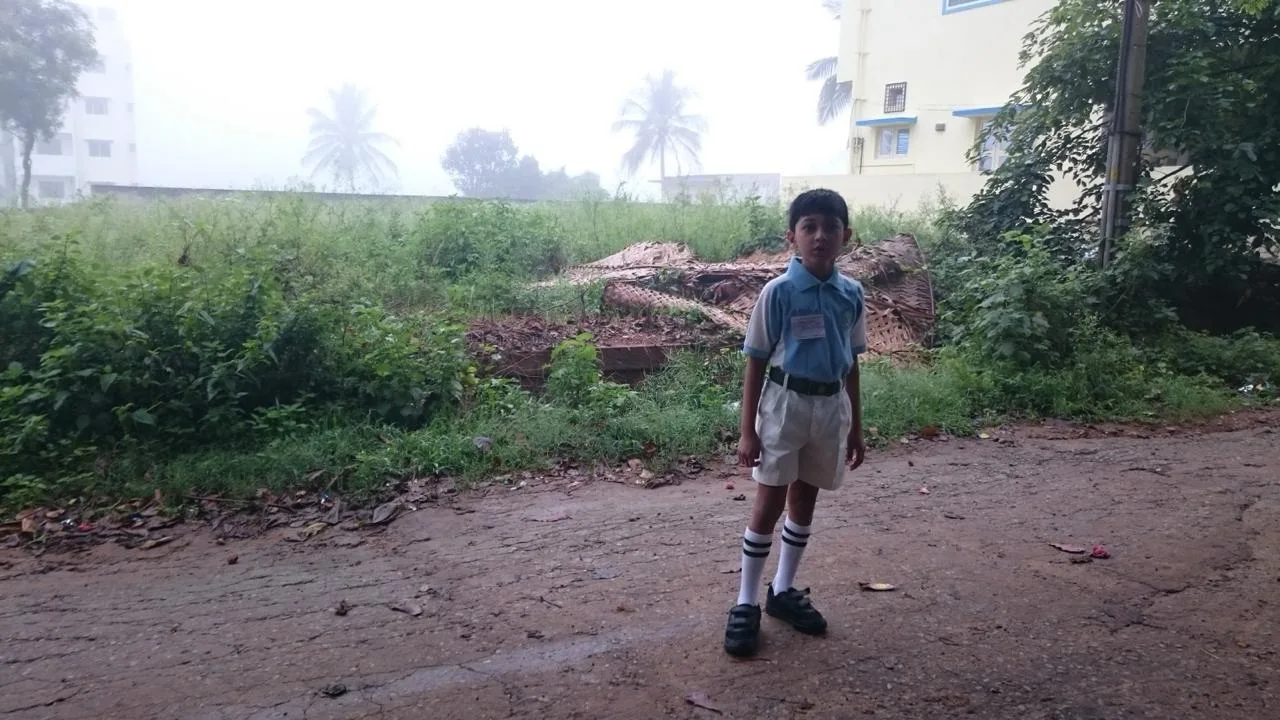
The student in this photograph had no idea that the next twelve years would involve research papers, student councils, leadership positions, software systems, conferences, mentorship programs, and countless lessons learned through both success and failure.
Delhi Public School Bangalore South was more than a school. It was the environment in which nearly every major part of my identity was formed. For twelve years, it was the one constant environment through which every stage of my growth passed. The student who entered in Grade 1 and the person who graduated in Grade 12 were separated by far more than time.
When I joined DPS in February 2014, I was a young student entering Grade 1, stepping onto a massive campus that felt like an entire world to explore. I was active, curious, approachable, and eager to participate in anything that came my way. Throughout my primary years, I regularly took part in school assemblies, intra-school competitions, and Science Day events. It was in these early, formative years that teachers played a major role in shaping my outlook, teaching me not only how to study but how to think, build confidence, and speak in public.
Technology quickly became a primary area of interest. Long before understanding the math behind programming or the physics of engineering, I enjoyed working with computers. Whether it was typing lessons, simple drawing applications, or logical puzzle games, the school’s computer labs were a sanctuary of early exploration. Our weekly computer classes strengthened that curiosity, laying the foundations for an enduring fascination with hardware, software, and systems.
First Exposure to Technology: The Atal Tinkering Lab
The trajectory of my life changed in Grade 6 when I stepped into the Atal Tinkering Lab (ATL). At the time, I had no idea that the same laboratory would eventually become one of the most defining parts of my school journey. What began as curiosity about electronics and design would later evolve into mentorship, leadership, and responsibility for helping future students discover the same opportunities.
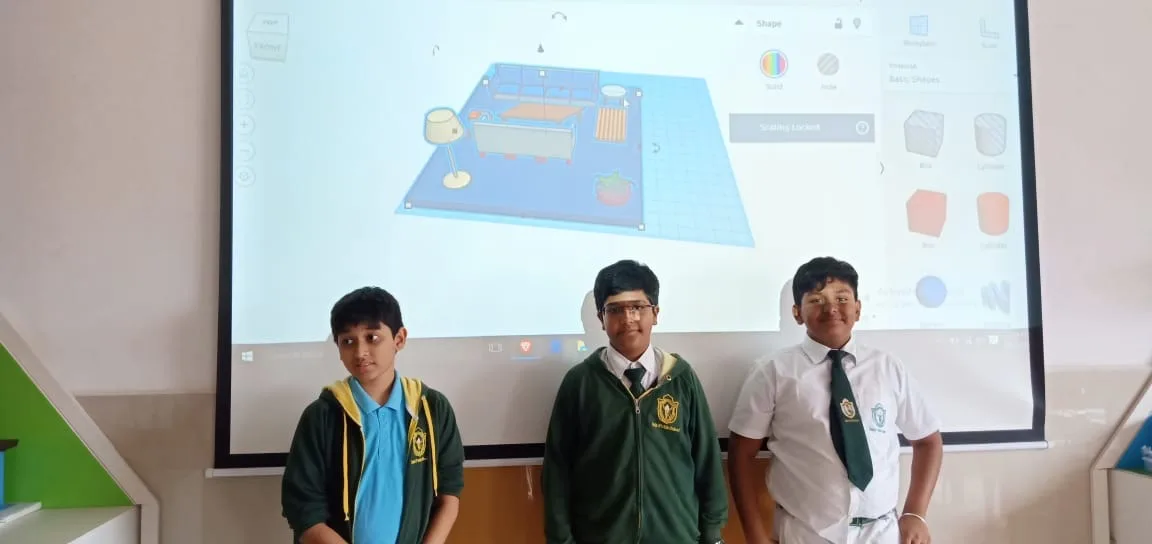
Walking into the ATL for the first time, I did not fully understand what I was looking at. There were wires, sensors, 3D printers, and tools everywhere. What I did know was that I wanted to understand how all of it worked. For the first time, I encountered structured design thinking, 3D modeling, physical prototyping, and collaborative STEM problem-solving. One of my first real milestones was learning to use TinkerCAD, a simple online 3D modeling tool. Together with my classmates, I designed a 3D model of a living room. It was a basic arrangement of shapes, but presenting that project to my peers taught me that virtual designs could be brought to life. That early project sparked a journey that moved from simple blocks to 3D printing, electronics, programming, and eventually building full-scale systems like Personal OS.
“TinkerCAD Living Room → ATL Exposure → Student Mentor → Senior Mentor → Research Projects → Personal OS”
Timeline
- —2014 — Joined DPS Bangalore South (Grade 1)
- —2019 — Discovered ATL and STEM Innovation
- —2021 — Became ATL Student Mentor
- —2023 — First Formal Leadership Role (Equality Club President)
- —2024 — Cauvery House Vice Captain
- —2025 — Cauvery House Captain
- —2025 — Founded P.L.E.D.G.E. Council
- —2025 — Led School-Wide Operations Across Conferences, Summits, and Outreach Events
- —2026 — Graduated DPS Bangalore South
The People Behind the Journey
No account of my time at DPS would be complete without acknowledging the teachers who shaped it. Different teachers influenced different stages of my journey. Some encouraged curiosity, some challenged me to think differently, some trusted me with responsibilities I did not yet think I was ready for, and some helped me navigate failures when things did not go according to plan.
While it would be impossible to name everyone, their collective influence is woven into every achievement, project, leadership role, and opportunity that followed. The person who graduated in 2026 was not built alone.
Leadership Journey
Leadership did not begin with major titles or stage appointments. It was a gradual evolution that began with classroom responsibilities, group project management, and trust built with teachers and classmates over a decade.
My first major appointment came in Grade 9 as the President of the Equality Club (a YLAC-affiliated initiative). This role was a turning point, requiring me to lead discussions on social issues, coordinate club initiatives, and manage public outreach. From there, each successive opportunity increased in scale, operational complexity, and the level of confidence required. As the Cauvery House Vice Captain in Grade 10 and House Captain in Grade 11, I was responsible for coordinating sports teams, cultural events, and house assemblies for hundreds of students.
In 2025, I took on even larger administrative responsibilities. Serving as the Head of Logistics for DiPSMUN 2025 and the Head of Registrations for the Eco Summit 2025 required managing massive databases, coordinating venue operations, and resolving real-time bottlenecks under pressure. In the same year, my work on the Career Connect Organising Committee involved facilitating outreach to universities and managing event flow. Through these roles, I learned that leadership is not about personal authority—it is about orchestrating complex organizational systems, building consensus, and ensuring operational reliability.
Looking back, the titles themselves were never the important part. What mattered was that teachers repeatedly trusted me with responsibilities that affected other students. That trust became something I worked hard to earn, maintain, and protect.
The ATL Transformation
The journey from entering the ATL as a curious Grade 6 student to returning years later to help operate, structure, and sustain the lab is one of the strongest full-circle moments of my school years.
When I was appointed an ATL Student Mentor in 2021, I transitioned from being the student asking questions to the one responsible for guiding others. Standing in the same lab, helping younger students troubleshoot circuits, explain 3D printing parameters, and design prototypes was a profound shift. The journey from student to mentor fundamentally changed how I viewed leadership. The goal was no longer simply learning for myself, but creating opportunities for others to learn, experiment, and grow. Mentoring forced me to understand technology more deeply, build patience, and realize that the ultimate success of a laboratory lies in the continuous transfer of knowledge to the next generation of builders.
Commerce with Artificial Intelligence
The decision to choose the Commerce stream in Grade 11 was a conscious and deliberate choice. While students interested in technology typically pursued the Science stream, I had a deep and growing interest in money, business structures, financial markets, and economics. Since my primary school years, financial mathematics and money-related topics had always been my favorites.
At the same time, I refused to let go of my passion for computer science and technology. The combination of Commerce with Artificial Intelligence offered the perfect interdisciplinary intersection. It allowed me to study accountancy, business, and economics while simultaneously learning the foundations of machine learning, data structures, and algorithms. This combination shaped my unique perspective on technology: I learned to view software not just as syntax and code, but as a practical business tool that creates economic value, optimizes financial systems, and solves real-world organizational problems.
Economics & Systems Thinking
Studying economics had a profound and lasting impact on how I approach engineering. Economics is, at its core, the study of how individual decisions and incentives influence massive, complex systems.
Learning about supply and demand, resource allocation, and market equilibrium taught me to think in terms of feedback loops and systemic dependencies. I began to realize that the rules governing human economics are remarkably similar to the principles of software architecture. Whether designing a local system like Personal OS or managing the logistics of a school-wide summit, success depends on understanding how different parts of a system communicate, how resources flow, and how incentives affect behavior. Economics bridged the gap between code and organization, shaping my approach to designing systems.
The Cost of Building
By Grades 11 and 12, I often found myself spending more time building projects, managing events, and pursuing responsibilities than participating in the social experiences many of my peers enjoyed. While I was proud of the work, it sometimes came with a sense of isolation.
This period taught me a hard but essential lesson: building successful projects and organizing massive events is ultimately hollow if you do not sustain your personal well-being, health, and relationships.
Looking back, I do not regret the work. I am proud of the systems I built and the leadership positions I held during those years. But I also learned that growth is not measured only by output, positions, or project commits. True personal development is about balance—learning to build meaningful things while also nurturing the relationships and personal peace that sustain you over the long run.
Lessons Beyond Textbooks
One of the most valuable lessons I took away from my twelve years at Delhi Public School Bangalore South was that success is a poor teacher compared to failure.
In school, we are often conditioned to seek the 'right' answer and avoid mistakes at all costs. However, managing real events, leading student houses, and engineering projects introduced me to real-world failures—from logistics glitches to failed prototypes. As I reflected during a Wisdom Wednesdays interview: 'We are taught how to pursue success, but rarely taught how to handle failure.' DPS was the place where I learned how to fail gracefully, adapt quickly, and build the resilience required to recover. Learning to handle setbacks with maturity became far more valuable than any textbook lesson.
Who I Became
The transformation across my twelve years at DPS is immense. When I joined the school in 2014, I was a young, curious child holding my parent's hand, stepping onto a large, unfamiliar campus.
When I graduated in 2026, I left as a system builder. I walked out of the gates with published research papers, extensive event management experience, leadership roles spanning hundreds of students, years of technical mentorship in the ATL, and a clear, focused direction for my future.
Most importantly, I left knowing that I was capable of learning almost anything if I was willing to put in the effort, stay curious, and keep moving forward after failure.
“DPS Bangalore South was where I discovered what I enjoyed building, what responsibilities I was willing to take on, and ultimately the kind of person I wanted to become. It is the beginning of every story that follows.”